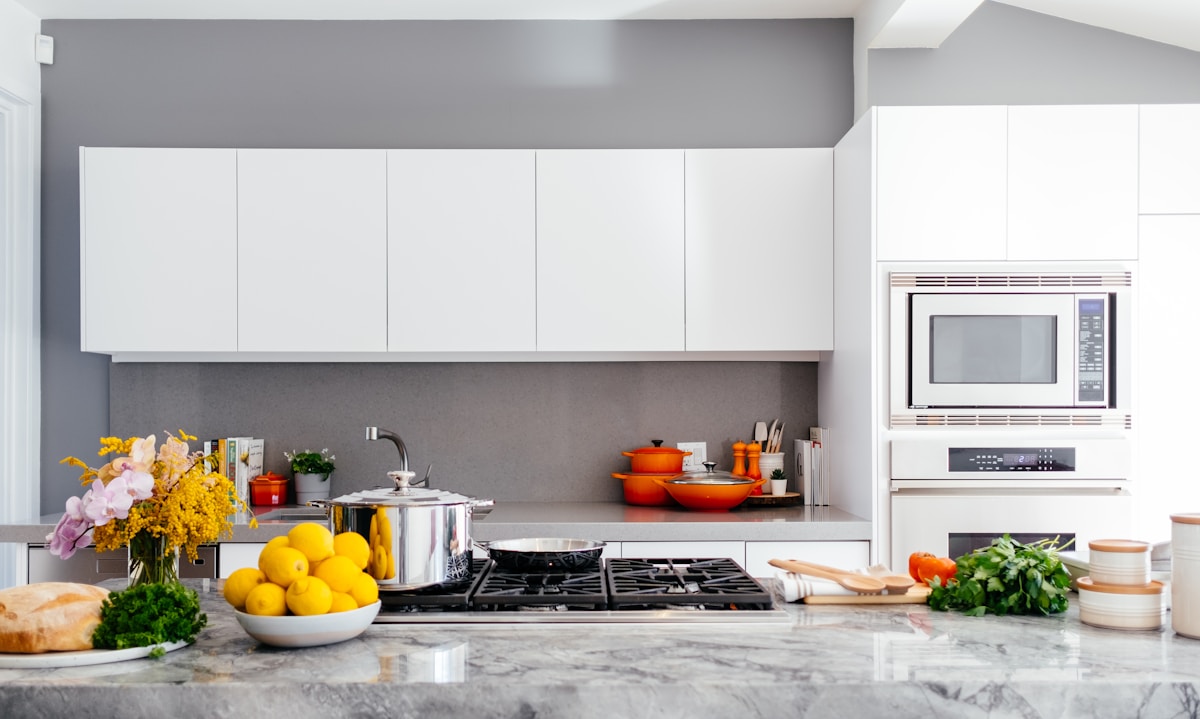
The kitchen is often the busiest room in the home. Keeping it functional, clean, and organized makes daily life significantly easier. These tips focus on simple systems that actually work in real life.
Daily Kitchen Habits
Small daily habits prevent the kitchen from becoming overwhelming:
- Clean as you cook: Wipe spills immediately, wash utensils while food cooks, and put ingredients away as you finish using them
- Empty the dishwasher in the morning: This single habit makes the rest of the day smoother since dirty dishes have somewhere to go
- Never go to bed with a dirty kitchen: Spend 10 minutes each evening cleaning counters, doing dishes, and wiping down the sink
- Wipe down surfaces daily: A quick wipe of counters, stovetop, and table keeps things feeling fresh
- Take out trash regularly: Don't wait until it's overflowing; take it out when it's about three-quarters full
Counter Organization
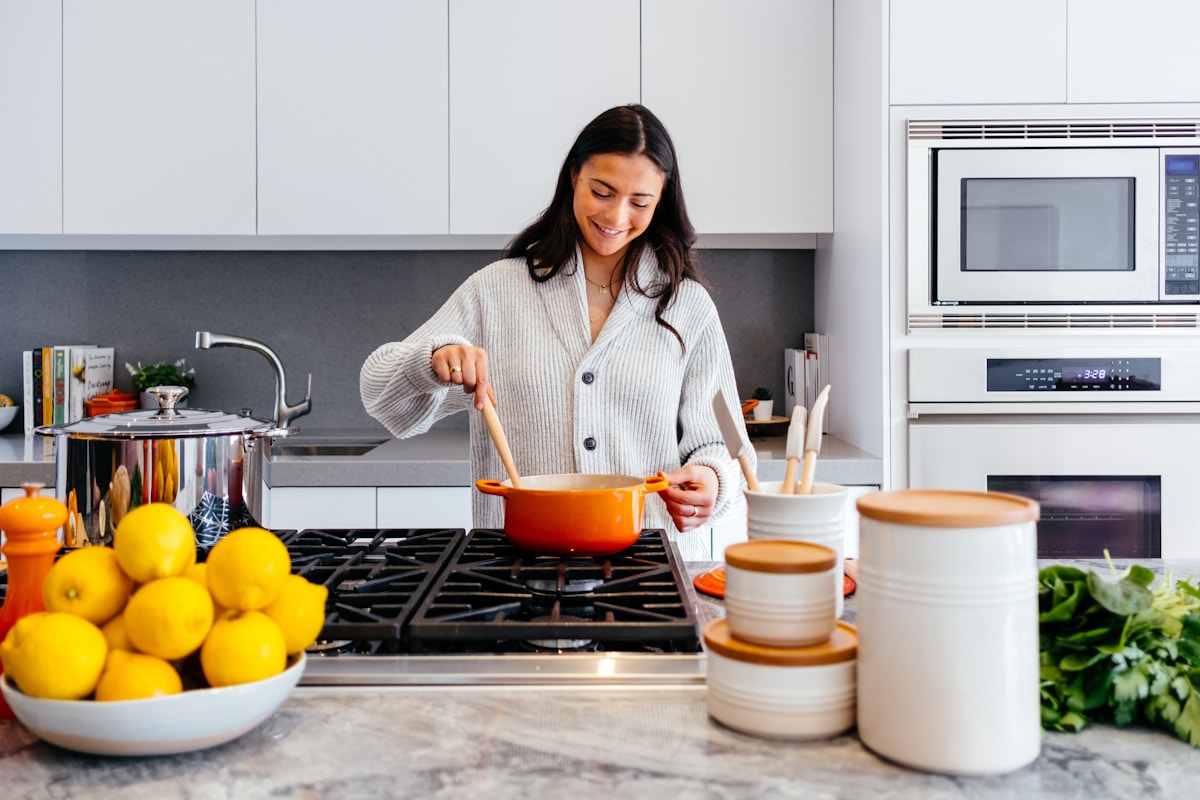
Clear counters make cooking easier and cleaning faster. Keep only what you use daily on the counter—coffee maker, knife block, cutting board. Everything else goes in cabinets or drawers.
Inside Cabinets and Drawers
An organized cabinet interior saves time and reduces frustration:
- Group like items together: All baking supplies in one area, all canned goods together, all breakfast items in one cabinet
- Use the vertical space: Shelf risers, stackable organizers, and hooks on cabinet doors maximize storage
- Store items near where you use them: Coffee and mugs near the coffee maker, pots near the stove, dishes near the dishwasher
- Front-facing labels: Turn cans and boxes so labels face forward—you can see what you have at a glance
- Drawer dividers: Use them for utensils, cooking tools, and small items so drawers don't become junk piles
Refrigerator Management
An organized refrigerator reduces food waste and makes meal planning easier:
- Do a quick clean-out once a week before grocery shopping
- Store leftovers in clear containers at eye level so they don't get forgotten
- Keep a "use first" area for items nearing expiration
- Wipe up spills immediately—they're much harder to clean once dried
- Use bins or containers to group similar items (all dairy, all condiments, all vegetables)
Pantry Organization
A well-organized pantry makes meal planning and cooking much simpler:
- Decant dry goods (flour, sugar, rice, pasta) into clear containers—you can see what you have and how much
- Use baskets or bins to group items by category (snacks, baking, breakfast, dinner ingredients)
- Place frequently used items at eye level
- Keep a running grocery list on the pantry door
- Check expiration dates quarterly and discard anything past its prime
Meal Prep Simplified
You don't need elaborate meal prep sessions. Simple preparation saves time during the week:
- Wash and chop vegetables right after grocery shopping
- Cook a large batch of rice or grains to use throughout the week
- Prep breakfast items the night before (overnight oats, cut fruit, set out bowls and spoons)
- Keep basics on hand for quick meals: pasta, canned tomatoes, frozen vegetables, eggs, bread

Cleaning Products and Tools
Keep these basics under the sink for quick cleanups:
- All-purpose cleaner
- Dish soap
- Microfiber cloths (they clean better than paper towels and are reusable)
- Small scrub brush
- Baking soda (for tough stains and odors)
- White vinegar (great for cutting grease and cleaning the microwave)
Weekly Kitchen Tasks
In addition to daily maintenance, tackle these weekly:
- Wipe down cabinet fronts and handles
- Clean the microwave interior
- Sweep and mop the floor thoroughly
- Wipe down small appliances
- Clean out the refrigerator
- Take out recycling
Final Thoughts
An organized, clean kitchen doesn't happen by accident. It's the result of small, consistent habits done daily. Start with one or two habits from this list, practice them until they're automatic, then add more.
The goal isn't perfection—it's a functional kitchen that makes your daily life easier and more pleasant.